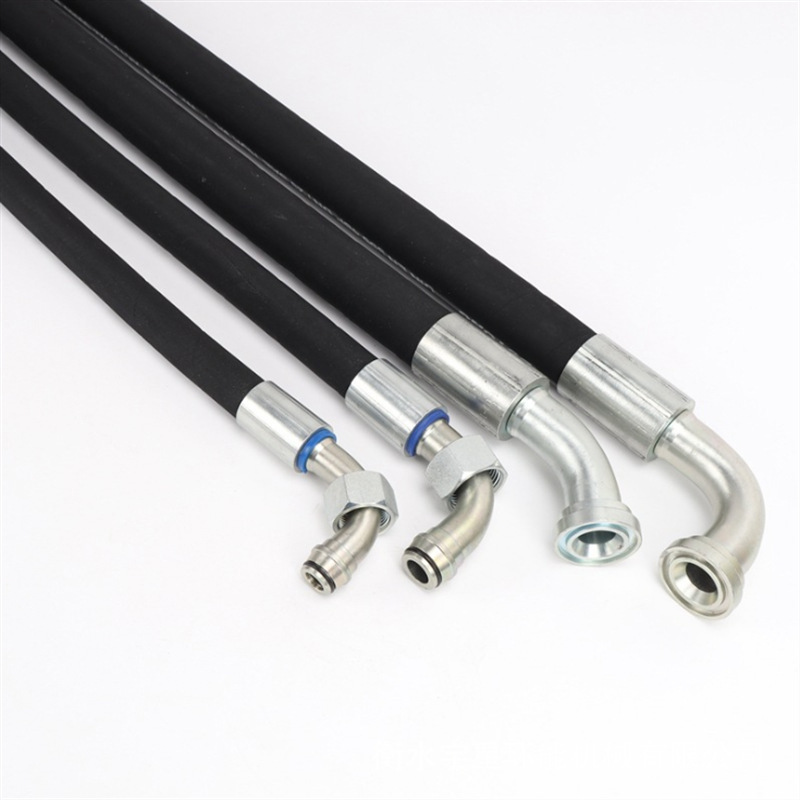
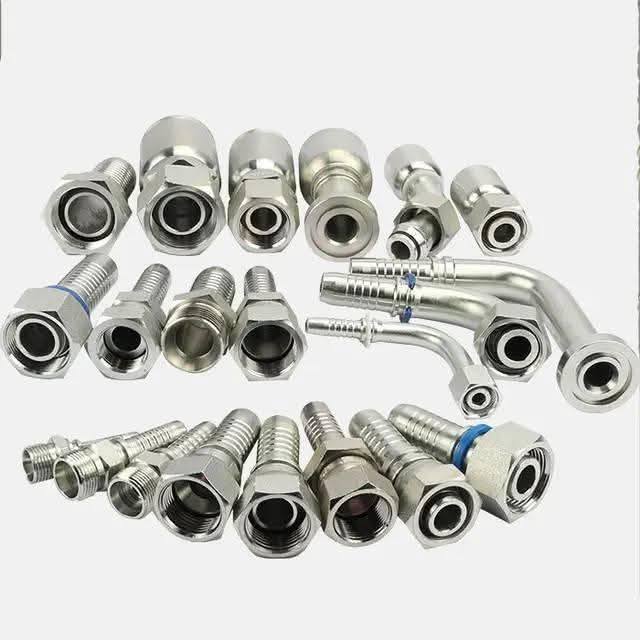
Essential Knowledge for Matching Hydraulic Hoses and Fittings
Read:
In industrial equipment and mechanical systems, the selection of matching hydraulic hoses and fittings directly affects the safety and operational efficiency of the entire system. Statistics show that approximately 40% of hydraulic system failures originate from pipeline connection problems, with improper hose and fitting matching being a major cause. This article systematically elaborates on ten key points for matching hydraulic hoses and fittings, helping engineers avoid common risks.
I. Pressure Rating Matching Principle
The rated working pressure of the hydraulic hose and fitting must be 1.25 times higher than the system's highest working pressure. For example, if the working pressure of an excavator's hydraulic system is 35 MPa, then a hose assembly with a nominal pressure of at least 43.75 MPa should be selected. Special attention should be paid to pulse pressure conditions. An accident at a steel plant where a hose burst due to neglecting pulse pressure demonstrates that under dynamic conditions, products with a pressure 30% higher than the static pressure should be selected.
II. Media Compatibility Verification
Different hydraulic oils exhibit significantly different corrosiveness to rubber materials. In an automotive production line using phosphate ester hydraulic oil, ordinary NBR material hoses resulted in swelling and detachment of the inner rubber layer after three months. It is recommended to conduct a 168-hour immersion test on special materials such as EPDM and FKM, in accordance with ISO 18752 standard. For water-glycol media, a special lining material must be used.
III. Temperature Adaptability Range
In the low-temperature environment of northern winters, the hydraulic hose of a certain construction machinery hardened and cracked at -35℃. Investigation revealed that the selected hose's low-temperature nominal rating was only -20℃. The correct approach is: the operating temperature range should extend 15℃ above and below the extreme ambient temperature. For high-temperature conditions, the additional impact of medium temperature rise must also be considered.
IV. Diameter and Flow Rate Control Turbulent flow losses occur when the flow rate in hydraulic lines exceeds 6m/s. In a case of injection molding machine modification, after changing the original 10mm diameter to 8mm, although the joint size matched, the flow rate increased to 9m/s, causing abnormal system temperature rise. It is recommended to calculate flow rate matching using the formula Q=πr²v and maintain the flow rate within the ideal range of 4-5m/s.
V. Identifying Connector Thread Standards
Mixing common JIC 37° cone seals with BSPP parallel threads can cause leakage problems. During the maintenance of a port crane, an American standard NPT connector was mistakenly installed on a British standard hose, resulting in loose threads after 200 hours of operation. It is essential to strictly distinguish between standards such as ISO 8434 and DIN 2353, and use specialized gauges to check thread fit.
VI. Ensuring Bending Radius
Violating the minimum bending radius during installation is a major cause of premature hose failure. Maintenance records for a wind power hydraulic system show that when the bending radius is less than 1.5 times the standard value, the hose's lifespan is shortened by 60%. Sufficient space should be reserved during layout; for DN16 hoses, a bending radius of at least 250mm should be maintained.
VII. Handling Vibration Conditions
Hydraulic systems of mobile equipment require special consideration for vibration resistance design. A hydraulic steering system for agricultural machinery using double-clamped connectors has a lifespan three times longer than single-clamped connectors. It is recommended to use hose assemblies with shock-absorbing sleeves in vibration-prone areas and to install pipe clamps for fixation every 500mm.
VIII. Optimizing Installation Angle
Twisting the hose during installation accelerates fatigue of the outer braided steel wire. Experimental data shows that a 5° installation angle can reduce pulse life by 30%. The professional practice is to mark the center line of the hose's outer wall and ensure that both ends of the connector are in the same plane during installation.
IX. Establishing a Maintenance Cycle
Preventative replacement based on operating conditions is more economical than reactive maintenance. A mining hydraulic system reduced its hose replacement cycle from 2 years to 1.5 years, resulting in a 75% decrease in failure rate. It is recommended to maintain a pressure pulse count record and initiate the replacement procedure when 80% of the rated value is reached.
X. Quality Certification Verification
Third-party certification marks on the hose assembly must be verified. A counterfeit SAE 100R2 hose had a burst pressure of only 60% of the nominal value. Legitimate products should have ISO 18752, EN 853, and other certifications, and provide complete type test reports.
Special Reminder: In special applications such as chemical equipment, additional requirements such as antistatic and flame retardant properties must also be considered. When selecting hydraulic systems, a technical confirmation from the manufacturer should be obtained to verify key parameters in writing. Records show that standardized technical communication can reduce compatibility issues by 75%.
By systematically understanding these ten key points, not only can the reliability of hydraulic systems be significantly improved, but the total lifecycle maintenance cost can also be reduced. It is recommended that companies establish a dedicated hydraulic pipeline selection database, digitizing historical failure cases and solutions to provide data support for future decision-making. With the trend towards intelligent systems, smart hoses with RFID tags have begun to be used, enabling real-time monitoring of usage status; this will be an important future development direction for hydraulic pipeline management.